

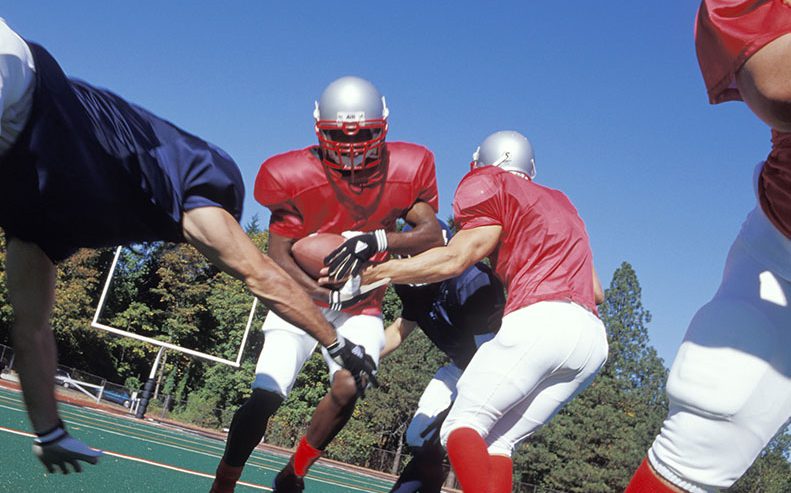


Football is a high-contact and high-energy sport that can leave players sidelined with a variety of injuries. If you play football or have a child who plays football, it’s important to recognize common football injuries. Knowing how to treat them right away can minimize lasting damage before you are able to see a medical professional.
What Are the Most Common Football Injuries?
Aaron Mares, MD, primary care sports medicine physician, UPMC Sports Medicine, identified some of the most common injuries sustained in football:
Ankle injuries
Running, jumping, and turning repeatedly for the length of a football game or practice can cause sprains, strains, tears, and fractures. Ankle injury symptoms may include:
- Bruising.
- Difficulty bearing weight and pain throughout the foot and ankle.
- Swelling.
- Tenderness and warmth to the touch.
High ankle sprains
High ankle sprains occur when the ankle and the foot roll outward, causing a sprain in the syndesmotic ligament. These are difficult to diagnose because swelling is often minimal. Other symptoms of high ankle sprains include:
- Inability to walk.
- Minor swelling.
- Pain or severe pain when you try to rotate the ankle outward.
- Significant bruising.
A high ankle sprain is diagnosed through an x-ray, MRI, or CT scan. Depending on its severity, there are different treatment methods.
- For moderate sprains, the R.I.C.E. method (rest, ice, compression, and elevation) is effective. The player may also need a splint, brace, or crutches.
- For more severe cases, surgery is required that places two screws to help the ligaments heal together. There is usually a six-month recovery time following this surgery.
Concussions
Whether you’re an elite performer, weekend warrior, or a football mom or dad, you likely know how serious concussions are. Classified as a traumatic brain injury, a concussion happens when a blow or hit to the head or body causes the brain to shake inside the skull.
Each season, estimates suggest that 10% to 19% of athletes playing contact sports will suffer a concussion.
There are more than 20 symptoms of concussion, with the most common being:
- Balance problems.
- Confusion.
- Dizziness.
- Fogginess.
- Headache.
If you do get hit in the head and have any symptoms, take these precautions:
- Get off the playing surface immediately and to a safe sideline.
- Visit a concussion expert for a full evaluation of your condition and an active treatment plan tailored to you.
Quick intervention and proper concussion management is the best approach to reducing the length and difficulty of recovery from concussion.
Knee injuries
Pivoting on the field to catch the ball, tackling or being tackled, or simply changing direction exerts significant pressure and strain on the knee. Knee injuries are often season-ending for football players because this joint works to maintain the body’s balance. Knee sprains, ligament tears, cartilage injuries, and tendonitis are common examples.
Symptoms of a knee injury include:
- Difficulty putting weight on the leg.
- Instability.
- Pain.
- Swelling.
The most common knee injuries include anterior cruciate ligament (ACL) and posterior cruciate ligament (PCL) injuries. The ACL connects your shin bone to your thigh bone and helps stabilize your knee. ACL injuries are often caused when an athlete changes directions quickly or lands awkwardly.
ACL injuries, called ACL tears or ruptures, are common among athletes. If you only tear the ACL partially, you may not need surgery. Sometimes, physical therapy and bracing can help it heal.
For a full ACL tear, you may need surgery to rebuild the ACL. The surgeon uses a graft — a piece of tissue from either your own body or from a donor. In many cases, ACL surgeries give you the best chance to return to the playing field. Recovery varies, as does a full return to sport, but often takes around nine months. That includes time for specialized physical therapy to regain movement, strengthen, and prevent re-injury.
PCL injuries are typically less severe than ACL injuries. They usually occur when a bent leg has a direct blow to the front of the knee. PCL injuries are often partial tears that can heal on their own. Many people don’t even realize they have a PCL injury, attributing any symptoms to a minor knee injury. PCL injuries are diagnosed through physical examination and an x-ray or MRI.
Treatment may include:
- Gentle stretching.
- R.I.C.E.
Shoulder injuries
Football’s hitting, pushing, and throwing motions create strain in the shoulders. These injuries can affect the cartilage, bone, ligaments, and muscles wrapped up in our shoulders. Falls, hits, and pressure can cause shoulder separations, sprains, strains, cartilage damage, fractures, and even dislocations.
Common shoulder injuries include:
- Fractures.
- Overuse injuries, such as tendonitis and bursitis.
- Rotator cuff tears.
Symptoms of a shoulder injury typically include:
- Difficulty lifting or rotating the arm.
- Instability.
- Pain.
- Popping or catching.
- Weakness.
Sometimes, shoulder injuries can cause pain down the arm and into the elbow.
How Can You Prevent Football Injuries?
There are several ways to help prevent football injuries including:
Using proper technique. Learn and consistently use proper technique to prevent injuries at all levels of the game.
Warming up and stretching. Begin practices and pregame warmups with light cardiovascular exercise followed by dynamic upper and lower body stretching.
Wearing the proper equipment. Wear a snug helmet to support the head and neck during contact. Position leg and girdle pads properly to help prevent contusions and protect bony areas of the body. Keep shoulder pads snug, but not so restrictive that they hinder normal breathing and chest expansion. And choose the right shoes for the playing surface to help limit ankle injuries.
If you sustain any injuries on the football field, seek medical attention immediately.
To learn more or to schedule an appointment, visit UPMC Sports Medicine or call 1-855-937-7678.
Editor's Note: This article was originally published on , and was last reviewed on .