



Knee ligament tears are common injuries that can occur during a traumatic accident or while playing sports. Reconstructive surgery is often required for severe tears to stabilize the knee.
Severe tears, such as a multi-ligament tear or a retorn anterior cruciate ligament (ACL), require advanced surgery. Procedures like multi-ligament reconstruction or ACL revision can help restore the knee’s strength and stability.
“The goal is to restore a stable knee for somebody to be able to do their day-to-day functions or get back to activity with a stable knee to protect the cartilage,” says John Kunkel, DO, orthopaedic sports medicine surgeon, UPMC in North Central Pa.
Learn more about complex knee ligament tears and surgical procedures that can fix them.
What Are Knee Ligaments?
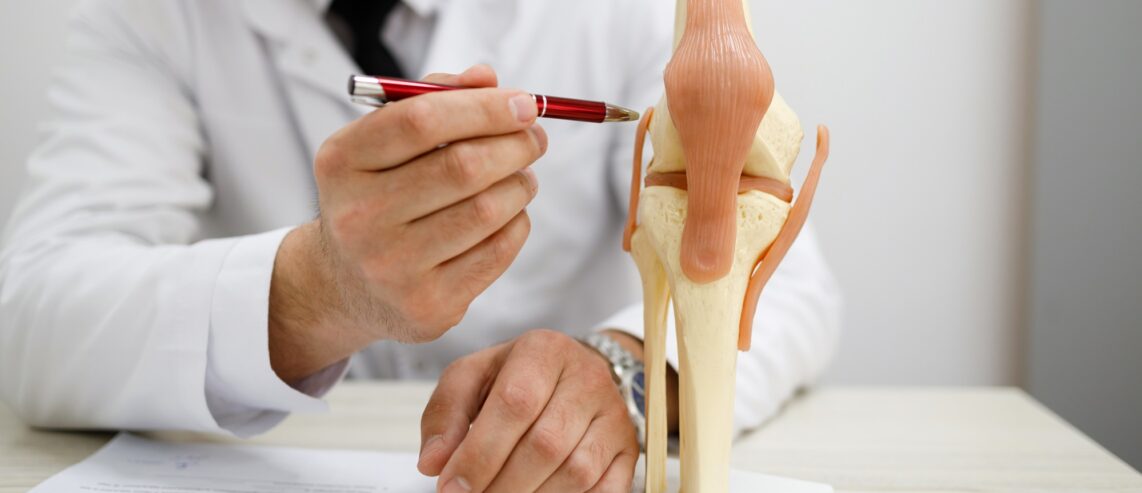
Knee ligaments are bands of strong, flexible tissue that connect your femur (thighbone) to your lower leg bones at the knee. They provide stability and support to your knee. There are four knee ligaments:
- Anterior cruciate ligament (ACL).
- Lateral collateral ligament (LCL).
- Medial collateral ligament (MCL).
- Posterior cruciate ligament (PCL).
The ACL and PCL are inside the knee joint; the ACL crosses in front of the PCL to form an X. The MCL and LCL are on the sides of the knee joint, with the MCL on the inside and the LCL on the outside.
Knee ligament injuries
Sudden trauma to the knee — such as physical trauma, twisting, or overextending your knee — can cause ligament injuries. Injuries can range from mild sprains to partial tears to complete tears. It’s also possible to tear more than one ligament at once.
Severe ligament injuries may also damage your knee cartilage, the tissue that lies between your bones and provides cushioning.
Surgery for Knee Ligament Injuries
For more minor ligament injuries — sprains, partial tears, and even some complete tears — you may not need surgery. But for severe injuries — complete ACL tears, multi-ligament tears, and ACL re-tears — surgery is often necessary for a full recovery.
If your cartilage also was damaged, cartilage restoration procedures also may be needed.
ACL reconstruction surgery
ACL reconstruction surgery can repair complete ACL tears.
In ACL reconstruction, surgeons replace your torn ACL with a tendon graft from your own body or a cadaver. Typical tendons used for the graft are the patellar tendon, quadriceps tendon, or the hamstring. They then drill tunnels into the femur and tibia to put the new ligament in.
“There’s a lot of nuance to where those tunnels go to restore people to function and decrease their risk of reinjury to their ACL,” Dr. Kunkel says.
Multi-ligament reconstruction surgery
Tears of multiple knee ligaments can occur in sports or from traumatic accidents, like car accidents. Tearing all four ligaments is rare, but there can be many combinations of two or three ligament tears.
“These are usually higher-level injuries,” Dr. Kunkel says. “We call them high-velocity or high-energy injuries.”
A multi-ligament reconstruction is a more complicated procedure than an ACL reconstruction, Dr. Kunkel says. It requires multiple grafts to repair the torn ligaments, so the surgeon typically will take most of the grafts from a cadaver. It also requires multiple tunnels in your bones to put the grafts in.
“All those tunnels are fairly close to each other, so it takes much more nuanced placement of the tunnels and being aware of where all the tunnels are,” Dr. Kunkel says. “You start to run out of real estate in the bone to be able to get all the tunnels where you need to get them, and it’s a longer procedure.
“It’s just more complex to be able to get all those tunnels in the right place with adequate fixation of all of the ligaments, so you want a surgeon who is used to this type of operation.”
ACL revision reconstruction
ACL revision reconstruction surgery can take place when someone re-tears their ACL. Dr. Kunkel says this is more often a sports injury.
For an ACL revision, the surgeon will create another graft. They may use another of your tendons or a graft from a cadaver.
Depending on the location of the initial tunnels, the surgeon may need to create new ones. Improperly placed tunnels from the initial reconstruction can cause ACL re-tears. If the initial tunnels are in the correct position, the surgeon may reuse them for the revision surgery. If the initial tunnels are in a bad position, the surgeon will create a bone graft and then create new tunnels after the bone heals.
Dr. Kunkel says he often backs up ACL revision reconstructions with a procedure known as a lateral extra-articular tenodesis (LET). The procedure involves making an incision on the outer part of the knee, taking a graft of the iliotibial (IT) band, passing it below the LCL, and attaching it to the femur. The procedure helps to create extra stability and reduce the risk of reinjury.
Recovery After Ligament Surgery
Recovery from ligament reconstruction surgery can take several months to a year. Factors can include the specific injury and procedures performed and the patient’s pre-injury level of activity.
People recovering are typically on crutches for at least the first six to eight weeks after surgery. They then spend months regaining the strength and conditioning in their leg. Physical therapy is a critical part of recovery.
You can typically walk around and perform day-to-day activities while wearing a brace within about two months, Dr. Kunkel says.
For athletes who hope to return to sport, the recovery timetable takes longer. An ACL reconstruction can take seven to nine months for recovery, whereas a revision reconstruction can take nine to 12 months. Recovery from multi-ligament reconstruction depends on which ligaments were torn.
Athletes typically are not cleared to play until the strength in their injured leg is close to that of their uninjured leg, which can take several months.
Dr. Kunkel says the goal of surgery is to return people to their desired level of activity. Multi-ligament tears are the most difficult to return from, he says.
“Every time we reconstruct one ligament, we can get it close to what your preinjury level was, but not quite,” Dr. Kunkel says. “And so, when you keep adding more ligaments on, then your risk adds a little bit more with each ligament reconstruction.
“And that’s true for whether it’s a revision of just an ACL or whether now we’re doing four ligaments all at once. You have a little bit increased risk with each one. Each one is almost as good but not quite as good as your anatomic ligament.
“That’s less noticeable when it’s one ligament like an ACL. But when you have all four, that’s a much higher risk. The goal is to make it a stable knee that can protect the cartilage.”
Protecting the cartilage can prevent long-term issues like arthritis, Dr. Kunkel says.
Why Choose UPMC for Knee Ligament Reconstruction?
When you tear one or more knee ligaments, it’s important to find care with an experienced care team. UPMC Orthopaedics and UPMC Sports Medicine provide expert care for a wide range of injuries, including ligament tears. Our goal is to help you return to your desired level of activity.
“Certainly, with ACL reconstructions, we get people back to the level of function that they want to be at,” Dr. Kunkel says. “So, a lot of college athletes getting back to college football or soccer or basketball. High school athletes, the same.
“With a higher-level injury in a car accident, good outcomes involve giving patients a stable knee that is pain-free and protects the cartilage.”
With UPMC orthopaedic and sports medicine locations throughout Pennsylvania and in New York, you can find expert care close to home. To find a location near you, visit our website.