

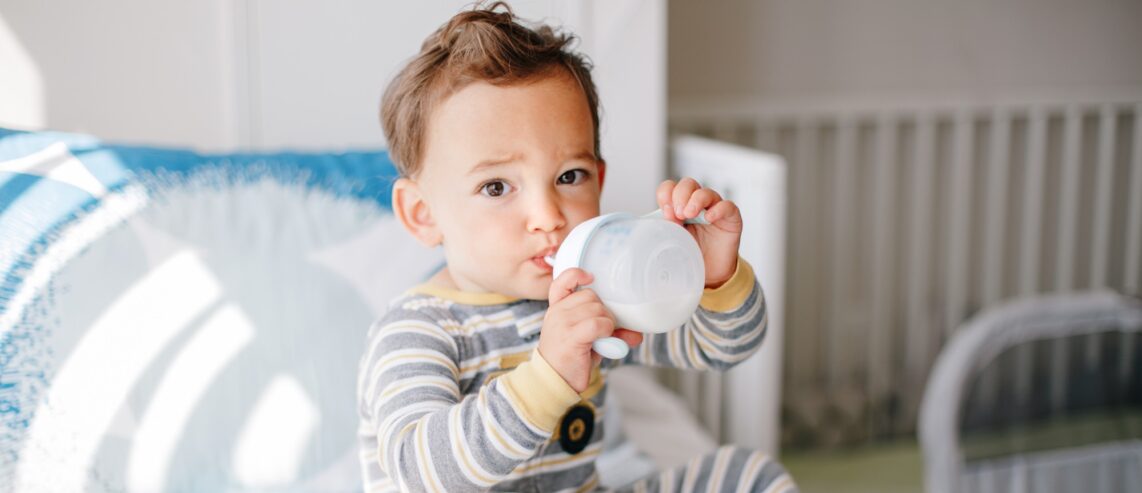


Once your baby stops drinking from a bottle, you may want to give them a sippy cup. These cups with spouts and lids prevent messy spills, but they have downsides, too. Sippy cups can encourage your child to drink too much juice or milk, raising the risk of tooth decay and childhood obesity.
So, is it ever ok for your child to use a sippy cup? Yes — but in moderation and only for short periods. Here, we look at when sippy cups are appropriate — and when to stop using a sippy cup.
From Bottle (or Breast) to Cup
The American Academy of Pediatrics recommends weaning your baby from a bottle by 12 months. That’s because prolonged bottle use can lead to your child becoming overweight or obese. Continually sucking on a bottle of milk or juice for comfort can also lead to dental decay and delayed speech.
Most babies can transition from bottle to cup between 6 and 9 months. To use a cup, they should have enough eye-hand coordination to lift the cup to their lips.
If your baby is breastfeeding, they will likely wean themselves by about a year — or nurse only occasionally after that. And many parents choose to breastfeed their babies for extended periods. But you can introduce a cup while you are still breastfeeding.
Some parents choose to forego the sippy cup and start with a cup with no lid. If your baby’s coordination allows — and you can live with some messes — you may be able to bypass the sippy cup altogether.
When to Stop Using Sippy Cups
A sippy cup — a child-sized cup with a lid and spout — is a transition between a bottle and a regular, open cup.
They limit spills, which makes them popular with parents. They are handy when you’re on the go. And sippy cups that allow liquid to flow without sucking can help babies learn to drink from a regular cup.
However, doctors recommend that you stop using sippy cups by the time your child is 2 years old. If you introduce a regular, child-sized cup at that time, they should be able to drink from it.
Of course, it can take several months for your child to learn to use a cup well. (Mind you, you can still expect some spills from time to time.)
One caveat: If your child has a developmental delay or disability, they may need to use a sippy cup past 24 months. Talk to your child’s doctor about their specific needs.
Why You Should Use Sippy Cups With Care
Many pediatricians caution against using sippy cups for a long period for these reasons:
- Drinking too much throughout the day can lead to poor nutrition and put your child at risk of being overweight. Your child won’t be hungry for healthy meals if they’re full of milk or juice. Juice has little nutritional value and is mainly empty calories.
- Milk, juice, or formula can collect in your baby’s mouth and damage the baby teeth. The problem is worse if your child goes to sleep with the sippy cup in their crib or sucks on it to calm down.
- Sippy cups limit the movement of the baby’s tongue and mouth. With cups that have valves, the action of the mouth and tongue is like sucking from a bottle. Toddlers who use these cups may not develop the ability to swallow correctly and may even have delayed speech.
Dos and Don’ts of Using a Sippy Cup
Sippy cups can be a useful, short-term transition between bottle feeding and using a regular cup. But they can also become a crutch if misused, such as soothing your child.
Do:
- Buy cups with your child’s favorite TV or movie characters on them to raise their interest in drinking from a cup.
- Choose a cup with an open spout. Sippy cups with valves will cause your child to suck as if from a bottle instead of drinking and swallowing normally. These sippy cups are essentially bottles in different forms.
- Consider limiting sippy cups to meals at the table. The cup should be a special item that only comes out at mealtimes, not something your child carries around all day.
- Have them practice using a cup in places where a mess won’t matter. (Your new sofa is not the ideal spot.)
- Practice using an open cup with small amounts of a thick liquid like yogurt. This will minimize the inevitable spills but still give your child a sense of how a cup works.
- Think of the sippy cup as a transitional phase, not a permanent solution. Make it clear to your child that it’s a stepping stone to using a “real cup.” (Hyping up the “big kid cup” is a tried-and-true ploy.)
- To get your child started, use a cup with two handles. These are easier for little hands to grasp and maneuver.
Don’t:
- Give your child a sippy cup full of juice or milk to calm them down when they’re upset. You’ll start a bad habit that may be difficult to break later on. Using a favorite cuddly toy or blanket is a better way to soothe your child.
- Let your child carry around a sippy cup full of cow’s milk, formula, or juice all day. Too much liquid can interfere with getting proper nutrition from food (if they’re full of juice or milk, they won’t be hungry). And the sugar from milk or juice clings to their teeth and can cause cavities or tooth decay.
- Let your fear of spills dictate your choices. It’s ok for babies and toddlers to make messes. If you’re mentally prepared for that to happen, you won’t be as upset with your child for an overturned cup of milk.
Sources
American Academy of Pediatrics, From Bottle to Cup: Helping Your Child Make a Healthy Transition, Link
American Dental Association, Training Cups and Your Toddler’s Teeth, Link
NHS, Drinks and Cups for Babies and Young Children, Link
National Library of Medicine, Age of Age of Bottle Cessation and BMI-for-Age Percentile among Children Aged Thirty-Six Months Participating in WIC, Link
Pathways.org, Parent’s Guide to Sippy Cup Alternatives, Link
Pathways.org, Sippy Cups: What You Should Know, Link