
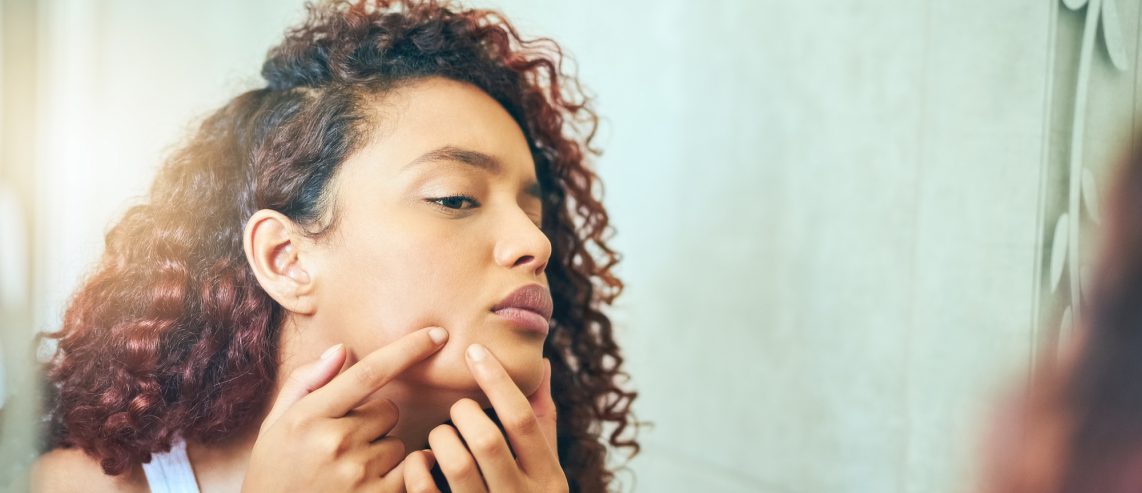


It never fails that a pimple appears the first day of school, the day before your interview, or the morning before a big social event. And there it is: red, painful, and positioned in plain sight on the tip of your nose or the middle of your forehead.
Touching a pimple, let alone popping it, is a bad idea, mostly because it has a way of making a bad situation even worse. Your best move is to let a pimple run its course and heal on its own time.
Resist popping that unsightly blemish that appears out of nowhere — anybody who has ever had one knows the temptation to touch, probe, and obsess about a spot. The following suggestions will help if that temptation is getting the best of you.
Is Pimple Popping Ever Okay?
Ideally, it is not a good practice to pop a pimple. There are consequences to giving into the temptation. Popping a pimple almost always makes things worse in the long run. There are many reasons why getting aggressive with a breakout often fails, including:
- Bacteria on your hands can cause further infection to the area.
- Pimple popping can delay the healing process.
- Pimple popping can force pus from the pimple deeper into your skin, which can lead to further breakouts and acne in the future.
- Pimple popping can lead to redness, scarring, and pitting on your face.
Is There a Safe Way to Pop a Pimple?
The only truly safe way to pop a pimple on your face is to have a dermatologist do it. Dermatologists have specialized training in treating acne. They have the tools to do the job safely and effectively.
Dermatologists also know what kind of treatment various types of acne require. Not every pimple or breakout is the same. They can make the correct diagnosis and create the best treatment plan.
Techniques dermatologists use to get rid of pimples
- Acne extraction. Doctors wear gloves and use special, sterile equipment to get rid of pimples.
- Incision and drainage. A dermatologist will use a sterile needle or blade to open the blemish and drain it.
- Injection with a corticosteroid. A doctor injects acne cysts or nodules with a corticosteroid to speed healing and reduce the risk of scarring. A corticosteroid injection will improve most acne nodules or cysts within 48 to 72 hours.
What if I Can’t Resist the Urge to Pop a Pimple?
It is hard to resist the urge or compulsion to pop a pimple on your face. This is especially true if the pimple is prominent and painful.
Avoid doing more harm than good when you decide to pop a pimple on your own. Take precautions to help minimize the chance of spreading bacteria. Do what you can to reduce the risk of increasing swelling, redness, and future scarring.
If you are determined to pop a pimple on your face, take the following steps
- Apply warm compresses (a cloth soaked in warm water) several times a day. The moist heat helps to bring the pus to the surface, which may pop the pimple on its own.
- Wait until the pimple looks ready to burst. It will have a firm white or yellow middle.
- Sterilize a needle with rubbing alcohol (if the compresses don’t make the pimple erupt on its own).
- Insert the needle. Push it gently into the middle of the whitehead and allow the pus to drain.
- Gently push down on the whitehead. Place pressure on either side (not on top) of the whitehead to release the pus. Wear medical gloves or use clean fingers wrapped in tissue to avoid spreading harmful bacteria.
- Wash your hands again when you’re done.
It is never safe to try to pop large nodules or cysts on your own at home. Swollen, painful lumps under the skin’s surface need a dermatologist’s care.
How Can I Help a Pimple Heal?
There are things you can do to help a pimple heal. These techniques aren’t necessary for every blemish, but they can help you see clearer skin more quickly.
- Keep your hands away from your face. Touching, picking, and popping can worsen acne.
- Relieve pain with ice. Ice reduces the painful inflammation that comes with some deep cystic acne nodules.
- Treat your acne. Many people can clear their acne with treatment that they can buy online or at a drugstore. Treatment takes time to work.
- Call a dermatologist if you don’t see improvement in 4 to 6 weeks, or if your acne is getting worse. You may need more specialized treatment.
How Can I Prevent New Breakouts?
Board-certified dermatologists recommend these tips to help prevent new pimples from forming:
- Choose the right skin care. Use gentle skin care products and ones that say “alcohol-free” on the label. Avoid products that can irritate your skin, including astringents, toners, and exfoliants. These products can dry your skin and make acne appear worse.
- Keep your hands off. Touching your face throughout the day can cause acne to flare and increase your risk for scarring and dark spots called post-inflammatory hyperpigmentation.
- Shampoo regularly. The oil from your hair can cause acne on your forehead. If you have oily hair, shampoo more often than you do now and keep your hair away from your face.
- Stay out of the sun and tanning beds. Along with increasing your risk for skin cancer, tanning damages your skin and can worsen acne. Some acne medications can also make your skin very sensitive to damaging ultraviolet rays from the sun and tanning beds.
- Wash your pillowcases and towels. Fabrics that touch your face are less likely to cause breakouts or make them worse if they are washed regularly.
Editor's Note: This article was originally published on , and was last reviewed on .
Sources
KidsHealth.org, Should I Pop My Pimple? Link
American Academy Dermatology, Pimple Popping: Why Only a Dermatologist Should Do It, Link
American Academy of Dermatology, How to Treat Deep, Painful Pimples, Link
Medical News Today, Pimple Popping: Should You Do It? Link
MedicineNet, What to Do After Popping a Pimple? Link