


Georgios A. Zenonos, MD, has dedicated a significant portion of his clinical practice to bringing hope and lasting pain relief to patients with cranial nerve disorders. As an associate professor of neurological surgery at the University of Pittsburgh School of Medicine and director of the Cranial Nerve Disorders Program at UPMC, Dr. Zenonos specializes in minimally invasive brain neurosurgery.
Understanding Cranial Nerve Disorders
Under Dr. Zenonos’ leadership in treating cranial nerve disorders, UPMC remains a leading center for the treatment of these conditions. This minimally invasive surgery treats the underlying cause of the disorders, including:
- Geniculate neuralgia — severe, deep ear pain, which is usually sharp.
- Glossopharyngeal neuralgia — sharp, stabbing pain in your throat, tongue, ear, or tonsils.
- Hemifacial spasm — progressive twitching on one side of your face.
- Trigeminal neuralgia — severe (often sudden) pain in your cheek, jaw, forehead, or eye area.
Trigeminal neuralgia occurs more often than other cranial nerve disorders. The National Institutes of Health reports that as many as 13 out of every 100,000 Americans receive a diagnosis of trigeminal neuralgia each year.
Dr. Zenonos recently sat down with HealthBeat to discuss his ongoing quest to improve quality of life for patients with facial pain and other cranial nerve disorders. He continues to pursue this through ongoing innovations in his clinic, laboratory, and operating room.
Q: What causes facial pain and spasms?
A: Our nerves are like bundles of cables. Just like cables, they have a “metal” part to them and “plastic insulation.” Of course, we don’t have metal or plastic in our body, but we have the equivalents; the nerves and the nerve coverings. The only way our brain can communicate with the rest of the body, either to deliver signals or to receive them, is through our nerves.
As we grow, our arteries tend to get slightly longer, just like our skin and other tissues. As the arteries in the skull become longer, they don’t have anywhere to go, so they create extra loops. Occasionally, these loops can impinge on nerves.
As our heart beats and the pressure in our arteries changes, they can cause small trauma to the nerves. This causes the coverings of the nerves to go bad, resulting in shorting of the electricity and signals within them.
This results in the brain confusing non-painful signals with pain (as it happens in trigeminal neuralgia), or causes inadvertent extra movements, which can lead to spasm (as in hemifacial spasm).
In some facial pain disorders, a nearby blood vessel may put too much pressure on the trigeminal nerve — one of the cranial nerves. This pressure can result in what many patients describe as the most intense pain imaginable. The pain is described as “electrical,” “stabbing,” and “shock-like.”
The pain attacks last no more than one minute or so but can occur hundreds of times each day. The pain can be triggered by light touch, cold air, or facial movement.
The severity of pain can affect the patient’s ability to eat, drink, and brush their teeth. Fortunately, many patients can get relief from a minimally invasive surgery known as microvascular decompression.
Q: Can you tell us how microvascular decompression works?
A: After making an opening in the skull the size of a nickel, we use a microscope, endoscope, or exoscope to locate the precise location where the blood vessel is affecting the nerve. We then separate the two, leaving a special polymer “pillow” in between.
Occasionally, this is also achieved with a sling technique for larger vessels, or less frequently with fibrin glue. Once the blood vessel no longer puts pressure on the nerve, relief is often immediate.
UPMC is a high-volume center for microvascular decompression. We use a dedicated multidisciplinary team. The result of those two facts is that our microvascular decompression patients can safely go to a regular hospital floor after surgery instead of the intensive care unit, which is the norm.
At UPMC, we offer microvascular decompression as a first-line treatment to appropriate patients, regardless of age. Any patient who meets the clinical criteria and is healthy enough to tolerate general anesthesia can receive this surgery.
Q: What is UPMC’s history with microvascular decompression?
A: In the mid-1960s, neurosurgeon Dr. Peter Jannetta continued the work of Dr. Walter Dandy and other early neurosurgeons, who noted that the cause of facial pain was likely due to blood vessels compressing the trigeminal nerve.
By the time Dr. Jannetta came to Pittsburgh in 1971, he had developed the surgical procedure we now know as microvascular decompression. He made some major leaps forward in microvascular decompression at UPMC in the 1970s and 1980s. Over time, this procedure has been refined to become minimally invasive with excellent outcomes and very low morbidity.
Q: How successful is microvascular decompression in curing facial pain?
A: Microvascular decompression works extremely well for people who are eligible to receive the surgery. In patients that fulfill all the criteria for surgery, the success rate is over 95% in addressing the pain of trigeminal neuralgia. Even in patients that don’t fulfill all the criteria, they can still be eligible for surgery and have good results.
Out of all patients, 82% get immediate, complete relief following surgery. An additional 16% get partial relief, requiring occasional or low-dose medication. One year after surgery, 75% of our patients continue to enjoy complete pain relief, and 8% have partial relief.
Our team has performed hundreds of microvascular decompression surgeries for patients with trigeminal neuralgia. The risks my patients face from this surgery are very, very low. The most likely side effect is partial facial numbness at 5%, and the numbers go down significantly from there.
This is a very safe procedure. In the last five years, we haven’t had a case with cerebrospinal fluid leak or the need to revise the wound for infection. The stroke risk is less than 0.3%.
The stroke risk for my patients who are under age 65 is 0.3%, but that rises to only 1.0% among patients over 65. I routinely perform this surgery on patients who are 80 or even older.
My patients face a surgical site infection risk of 1.5%, and we went literally 10 years without a single patient experiencing a cerebrospinal fluid leak.
Q: How have you been able to refine microvascular decompression surgery?
A: We’ve been able to make the surgery much more gentle over time. Sort of like an operation on the knee or hip, we’ve been able to continually refine the procedure to make the recovery easier and the operation itself safer.
For example, the incision site has been refined to be just over an inch in size. In addition to Teflon cushions, there are a variety of other techniques, which can be used for more complicated cases, such as the sling procedure for compression from large arteries.
We’re able to repair tissues in a way that very much resembles the original anatomy. For example, with the use of artificial bone as opposed to metal plates, we can restore the normal contour of the skull and minimize chances of cerebrospinal fluid leak and infections. The wounds are closed with absorbable sutures, which makes it easier for patients to return home without the need to travel back to the hospital.
During the operation, we no longer routinely sacrifice any veins as we’re able to work in between them and achieve the same result. Modern neuroanesthesiologists are using improved techniques that allow easier and faster recovery.
Our average hospital stay is just over one day. We have teams of neurosurgeons who come from other countries to see how we achieve our statistics. Their patients’ length of stay is typically five to six days.
But the biggest reason for improvement has been more precise patient selection. Unfortunately, microvascular decompression works for only a small subset of people who experience facial pain.
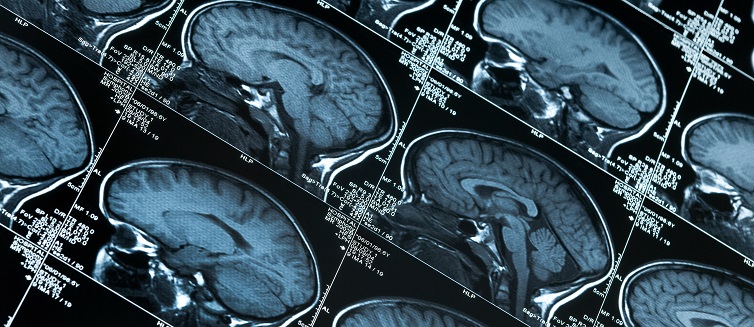
At UPMC Presbyterian, our patients undergo a special thin-slice MRI with a heavily weighted T2 weighting. This diagnostic scan gives us the best possible view of the cranial nerves and surrounding blood vessels.
We work closely with a few of our neuroradiologists, like Dr. Marion Hughes and Dr. Katie Traylor, who help us interpret these studies. This MRI lets us know whether surgery will help a person’s pain or not.
Q: What can help patients who aren’t surgical candidates?
A: We have a multidisciplinary team with pain specialists that specialize in facial pain and can help optimize complicated medical regimens to address the pain. Other options are more radical surgeries which our center also offers.
Some patients find that medical therapy brings their symptoms under satisfactory control. But many patients find that their pain either becomes resistant to medication or requires larger doses. Side effects from medications can become challenging over time.
Q: What clinical innovations are on the horizon for patients with severe facial pain?
A: Our surgical techniques continue to evolve to maximize effectiveness and minimize morbidity, making it an easier experience for our patients.
Through research, we aim to better understand the disease processes that lead to cranial nerve syndromes. While we understand that vascular compression is frequently the cause, there are many other patients that we don’t fully understand what causes them to have pain. Our hope is that by understanding the disease process, we will be able to develop better ways to treat this large group of people.
Editor's Note: This article was originally published on , and was last reviewed on .