
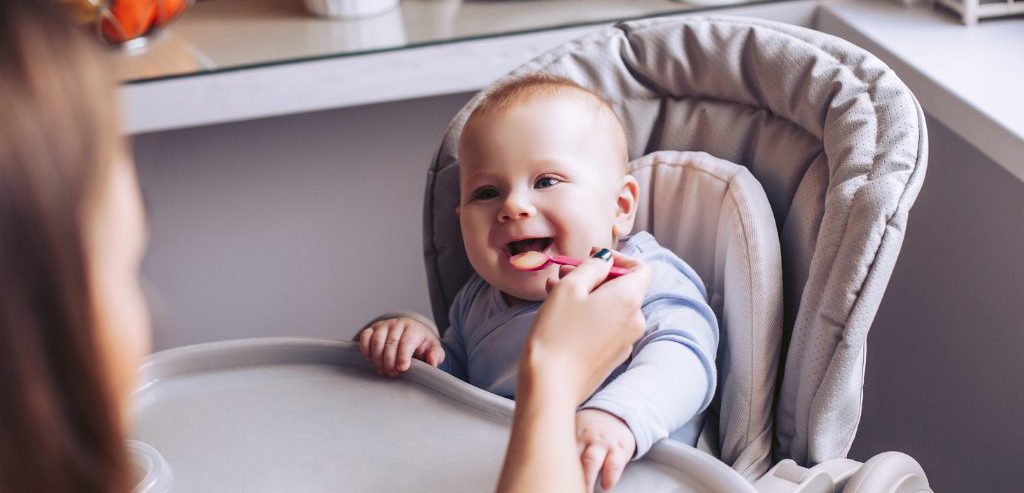


If your baby has recently started eating solid food, you may be wondering if it’s OK to give them homemade baby food.
Homemade baby food can an appealing option for parents who want to know exactly what they are feeding their baby. And preparing baby food at home is often less challenging than one might think.
Baby food made from scratch doesn’t have to be more complicated than cooking simple and nutritious foods and then blending those foods so they are easy for your child to eat. At its easiest, homemade baby food can be as simple as peeling a banana or slicing a ripe avocado.
Here’s what you should know about homemade baby food.
When Should I Introduce Solid Food into My Child’s Diet?
You can meet your infant’s nutrient needs exclusively via breast milk and/or iron-fortified infant formula up until about 6 months of age.
The American Academy of Pediatrics (AAP) recommends waiting until babies are about 6 months old before introducing solid foods. However, some babies may be ready earlier, at between 4 and 6 months old. You should never introduce solid foods before 4 months.
Look for developmental signs that show your baby is ready for solid food. These signs include:
- The ability to keep food in their mouth without it dribbling out.
- The ability to sit upright in a high chair, feeding seat, or infant seat.
- A body weight that has doubled since their birth.
- Good head control.
- Reaching for your food or opening their mouth when food comes their way.
Talk to your child’s pediatrician about whether it’s the right time to introduce solid foods.
What Solid Foods Should I Try First?
To meet the nutrient demands for infant growth, the first solid food offered should be an iron-fortified infant cereal (oat-based). You can mix it with breast milk, infant formula, or water, and feed it with a spoon.
The AAP advises parents to introduce solid foods one at a time (rather than in the form of food mixtures or infant dinners). Ideally, you should space out new foods by about three to five days. This helps you watch for any food intolerances or allergic reactions.
Smooth purees are initially recommended to help ease a baby into eating solid foods. Once a baby has mastered purees, you can increase food textures slowly and steadily by blending food into coarser purees, then moving on to chunkier and lumpier textures, and finally progressing to fork-mashed and soft finger foods.
It’s important to keep choking hazards in mind. Soft foods that are cut in small pieces and easy to swallow can help prevent choking.
Can I Make My Own Baby Food?
According to the AAP, it is OK to make your own baby food.
Many parents elect to make their own baby food for economic reasons. Homemade baby food is much cheaper than store-bought, particularly when you cook and store it in large batches.
Making homemade baby food can expose a baby to a greater variety of foods and get them accustomed to eating the same foods as the rest of the family. It can also save space in the refrigerator and freezer.
Many parents like to create their own food combinations rather than rely solely on the flavors sold by manufacturers.
Tips to Make Your Own Baby Food
Safety
If you make some or all of your baby’s food, it is essential to start with basic food safety measures. Clean all food preparation surfaces, utensils, equipment, and linens thoroughly, and wash your hands very well.
If you purchase fresh produce, try to use what you buy within a few days. Scrub all fresh fruits and vegetables, and then peel off any skin, seeds, or membranes.
You may also opt for frozen produce. Many frozen fruits and vegetables are flash-frozen immediately after being picked, so few nutrients are lost in the freezing process. However, frozen produce does not usually produce vibrant colors and flavors like fresh produce.
Cooking
Bake, steam, roast, boil, or microwave the selected food until tender. Brown ground meats and poultry with a small amount of canola or extra-virgin olive oil until no pink areas are visible. After browning, drain the excess fat and remove any skin or connective tissue.
Boneless, skinless fish (either fresh or defrosted frozen) can be cooked in a steamer basket for five to 10 minutes, or until it flakes easily. Double-check for bones after cooking.
Eggs must be cooked until the yolks are firm. Legumes and tofu (preferably silken) generally do not need to be cooked prior to serving. Look for low-sodium canned beans, and then drain and rinse well in a colander.
Tools
Combine the cooked food(s) with a little liquid, such as water, breast milk, infant formula, or low-sodium broth. When preparing meat, poultry, or fish, a good rule of thumb is to add one cup of steaming water or low-sodium broth for every 8 ounces of raw animal protein.
You can then use various types of kitchen equipment to puree, grind, process, or mash the food into the desired texture. Examples of possible tools for this step include:
- Baby food maker — An all-in-one tool that first steams food (fruits, vegetables, meats/poultry) and then purees the cooked food. Some models also defrost and/or reheat previously prepared food.
- Blender or food processor — You may already have one or both of these in your kitchen. Most blenders/food processors have a few different settings (to create different textures) and can frequently be disassembled and washed in the dishwasher. Some parents find these to be cumbersome and don’t like the amount of cleanup required for small jobs.
- Hand blender or immersion blender — A handheld electric gadget that is submerged into food, takes up less space, and requires less clean-up than a conventional blender.
- Hand-turned food mill — Portable and non-electric, a food mill typically includes multiple blades to create different food textures.
- Baby food grinder — Non-electric, portable, and very inexpensive. It will break down food, but does not usually offer a choice of food textures.
- Fork or potato masher — Can easily mash foods such as bananas, avocados, and papayas for a baby.
Seasonings
Baby food does not need to be bland. Babies can tolerate and enjoy different flavors. You can add mild seasonings to homemade food to enhance the taste.
Do not add sugar or salt to foods prepared for babies and toddlers. Infants and young children do not need any extra sugar, and their kidneys cannot handle the extra sodium.
In addition, you should never add honey to a child’s food before 12 months of age. Honey can contain botulism spores and cause a potentially fatal form of food poisoning.
If you are preparing an especially spicy dish, it is likely best to reserve a portion for your baby before the spices are added.
Textures
Ensure that any food offered to young children is always moist, soft, and juicy. This is necessary to minimize the risk of choking. Infants and toddlers also tend to reject anything stringy, dry, or tough.
Temperature
Serve baby food no warmer than body temperature. Use caution if heating meals in the microwave, as microwaves can heat food unevenly and create “hot spots.” Stir microwaved food well and allow it to sit for a few minutes prior to serving.
Storage
Only dish out the amount of food that you anticipate your baby will eat in a single feeding. Once a utensil has gone into the baby’s mouth and back into the remaining food, bacteria can grow. Any leftover food that has had contact with your baby’s saliva needs to be thrown out.
Homemade baby food should not be left at room temperature for extended periods of time. Any food that has been kept at room temperature for more than two hours should be discarded. Refrigerate leftovers in an airtight container and use within about three days.
Preparation
Do not hesitate to make large batches of baby food at once. You can easily make one month’s worth of food by preparing three to four fruits or veggies at one time. There are numerous types of storage containers sold specifically for refrigerating and freezing small servings of homemade baby food.
You can also divide the prepared food into ice cube trays and place these in the freezer. Once the cubes are frozen solid, transfer them from the ice cube tray into plastic freezer bags. This method makes quickly defrosting small amounts of food much easier.
Frozen fruits and vegetables can be stored for about six to eight months, and frozen meat and fish will last for about one to two months.
Things to Remember When Making Baby Food
- Root vegetables (carrots, sweet potatoes, turnips) and soft fruits (pears, peaches, plums) are mild in flavor and tend to make smoother purees. Babies just starting solids tend to find this more palatable.
- Parents often worry that if babies taste sweeter foods first (such as fruit), they will develop a preference for a sweet taste and reject vegetables. However, research hasn’t proven this to be true.
- Some parents express concern about offering vegetables that tend to be high in nitrates. Nitrates are chemicals found in water and soil that can be toxic for very young babies. Examples of high-nitrate foods include beets, carrots, green beans, spinach, and squash. These foods pose no risk to infants as long as solid food is not introduced before 4 months of age. After a baby reaches 4 months, the digestive system is mature enough to handle foods high in nitrates.
- Store raw meat, poultry, and fish separately from other foods in the refrigerator to prevent contamination of other foods. Clean your hands, kitchen surfaces, utensils, and any kitchen equipment that has come in contact with the raw juices very well.
For more information about introducing solid foods or making your own baby food, talk to your child’s pediatrician.
Editor's Note: This article was originally published on , and was last reviewed on .